
The Shawshank Redemption is one of those films that sticks with you long after the credits roll. For me, it wasn’t just the gripping story or the brilliant performances that made it unforgettable; it was the way the film delves deep into the concept of escapism. We all have our ways of coping with life’s challenges, but The Shawshank Redemption takes that idea and explores it within the brutal, confining walls of a maximum-security prison.
From the very beginning, we’re introduced to Andy Dufresne, played by Tim Robbins, a man wrongfully convicted of murder and sentenced to two life terms at Shawshank State Penitentiary. As Andy navigates the harsh realities of prison life, it becomes clear that his physical confinement is only part of his struggle. The real story is about his psychological journey and his need to escape—mentally, emotionally, and, ultimately, physically.
Finding Freedom Within Confinement
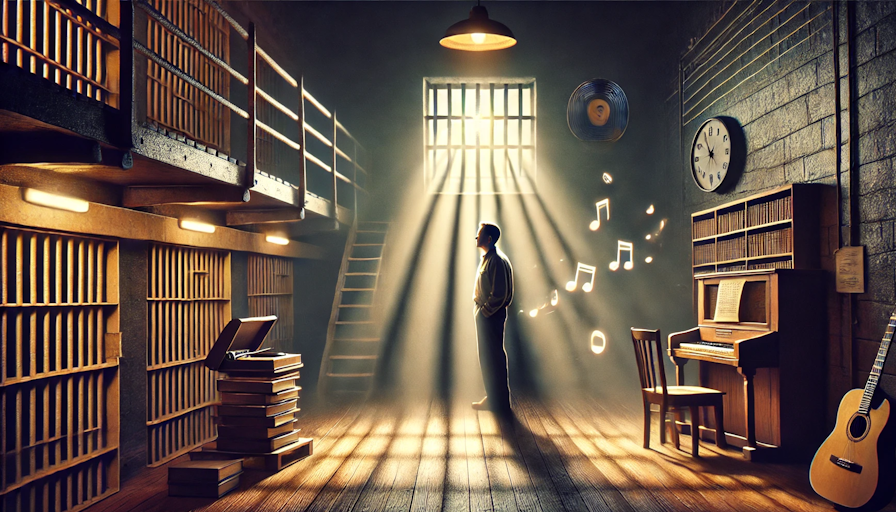
One of the most striking aspects of the film is how it portrays the concept of freedom. Even though Andy is physically imprisoned, he finds ways to escape the crushing monotony and dehumanisation of prison life. One of the first glimpses we get of Andy’s internal escape is through his love of music. There’s a particularly powerful scene where he locks himself in the warden’s office and plays a record over the PA system. The music floods the prison, momentarily transporting the inmates to a place far beyond the walls of Shawshank. As Morgan Freeman’s character, Red, narrates, “I have no idea to this day what those two Italian ladies were singing about. Truth is, I don’t want to know. Some things are better left unsaid. I’d like to think they were singing about something so beautiful it can’t be expressed in words, and makes your heart ache because of it.” This scene beautifully illustrates how art, even in its simplest forms, can provide an escape from the harshest of realities.
The Library as a Sanctuary
Andy’s creation of the prison library is another example of how he carves out a mental escape from Shawshank. Over the years, he builds the library into a sanctuary for the inmates, a place where they can lose themselves in books and, for a time, forget where they are. It’s more than just a room full of books; it’s a symbol of hope and intellectual freedom. For Andy, the library represents a way to keep his mind sharp and his spirit unbroken. It’s in this library that he educates fellow inmates and, in a way, gives them a piece of the freedom that was taken from them.
There’s a touching moment where Andy acquires funding for the library by persistently writing letters to the state for six years. This act of determination not only showcases Andy’s resilience but also underscores the idea that escapism often requires perseverance and belief in something greater than oneself. The library becomes a metaphor for Andy’s hope—a place where he can mentally escape, even when physically trapped.
The Power of Hope
Hope is a central theme in The Shawshank Redemption, and it’s closely tied to the idea of escapism. Red, played masterfully by Morgan Freeman, initially dismisses hope as dangerous, saying it can “drive a man insane” inside prison. But Andy believes otherwise. His hope is what keeps him going, what allows him to endure the injustices of Shawshank and eventually outsmart the system.
One of the most powerful lines in the film is when Andy says, “Hope is a good thing, maybe the best of things, and no good thing ever dies.” This sentiment captures the essence of Andy’s escapism—it’s not just about physically escaping Shawshank; it’s about maintaining hope in a place designed to crush it.
The final scenes of the movie bring this full circle. Andy’s literal escape from Shawshank, crawling through 500 yards of foul-smelling sewage to freedom, is the culmination of his mental and emotional journey. It’s the ultimate act of defiance against the system that tried to break him. When Red finally joins Andy in the idyllic setting of Zihuatanejo, the film leaves us with the powerful message that true freedom comes from within.
A Reflection on Escapism
The Shawshank Redemption is more than just a film about a prison break; it’s a profound exploration of how the human spirit seeks out escape in the most desperate of circumstances. Whether it’s through music, literature, or the enduring power of hope, Andy Dufresne’s journey reminds us that escapism isn’t just about avoiding reality—it’s about finding a way to survive it.
The film resonates on a deeply personal level because we all have our own Shawshanks, those metaphorical prisons we find ourselves in. Andy’s story encourages us to seek out our own forms of escape, to hold onto hope even in the darkest of times, and to believe in the possibility of freedom—no matter how confined we may feel.
In the end, The Shawshank Redemption isn’t just a story of one man’s escape from prison; it’s a testament to the resilience of the human spirit and the transformative power of hope. It’s a reminder that, even in the most oppressive circumstances, we can find ways to escape—not just in body, but in mind and soul.


