When drainage problems appear, many people are told they need a CCTV survey. While surveys have their place, they are often misunderstood and frequently overused when the real goal is simple fault finding. If you are dealing with recurring blockages, bad smells, slow drainage, or unexplained flooding, the approach you choose matters more than most realise.
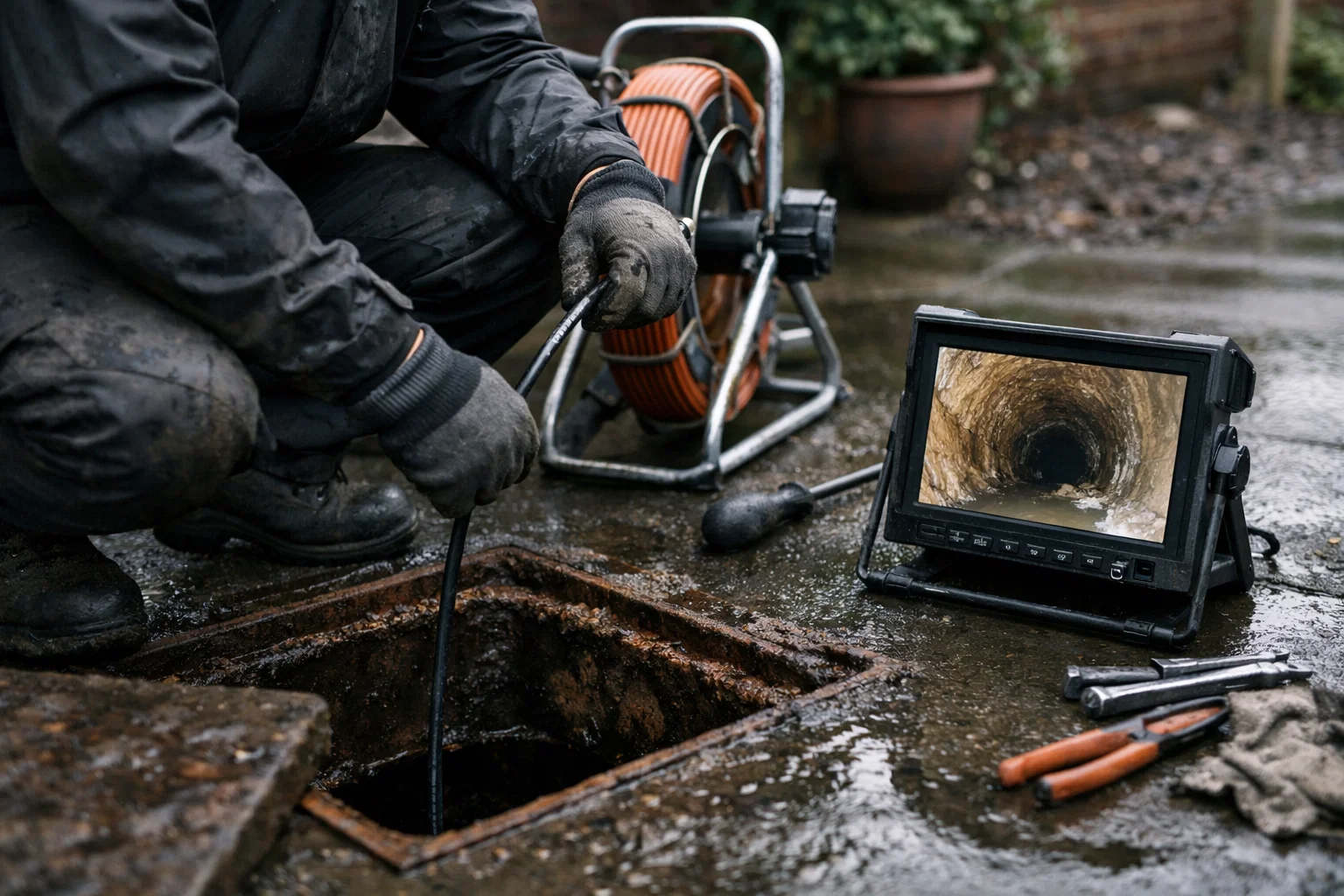
A CCTV drain inspection focuses on diagnosing a specific issue, rather than producing a broad overview report. It is targeted, practical, and designed to identify faults quickly without unnecessary extras. For most real world drainage problems, this makes inspection the smarter and more effective option.
This is why professional services like CCTV Drain Inspection are increasingly preferred when accuracy and speed matter more than paperwork.
Understanding the Difference Between a Survey and an Inspection
A CCTV drain survey is typically designed for property transactions, insurance claims, or long term asset documentation. It produces a structured report that maps pipe runs, grades condition, and records system layout. While useful in certain situations, surveys are often excessive when the goal is simply to find what is wrong.
A drain inspection, on the other hand, is fault focused. It is carried out to identify the cause of a problem that already exists. The priority is not mapping every pipe but locating blockages, breaks, collapses, root intrusion, or misaligned joints as efficiently as possible.
For homeowners and businesses dealing with active drainage issues, inspection delivers answers faster and with less complexity.
Fault Finding Requires Precision, Not Paperwork
When a drain is backing up or producing persistent odours, the cause is usually localised. A collapsed section, a build up of debris, or tree roots entering the pipe can often be pinpointed quickly with a focused inspection. This avoids spending time recording sections of pipe that are working perfectly.
Surveys often involve detailed grading systems and extended reporting, which adds time and cost without necessarily improving diagnosis. For fault finding, what matters most is seeing the issue clearly and understanding how to fix it.
An inspection provides exactly that. Real time visuals, clear explanations, and immediate identification of problem areas.
Less Disruption, Faster Results
Drain inspections are usually quicker to carry out than full surveys. Because the focus is narrowed to problem areas, there is less time spent navigating irrelevant sections of pipework. This is especially valuable in residential properties where access points may be limited.
Faster diagnosis means repairs can be planned sooner, reducing the risk of further damage. In many cases, issues can be resolved before they escalate into costly emergencies.
For businesses, this speed minimises downtime. For homeowners, it reduces stress and uncertainty.
Clear Visual Evidence Without Overcomplication
One of the biggest advantages of inspection over survey is clarity. The footage captured during an inspection is used to explain the problem directly, without burying it in technical grading systems or lengthy reports.
Clients can see cracks, blockages, or intrusions for themselves. This builds confidence in the diagnosis and helps them understand why a specific repair is recommended.
When fault finding is the goal, simplicity improves decision making.
Cost Effective and Purpose Driven
Because inspections are targeted, they are often more cost effective than full surveys. You are paying for diagnosis, not documentation. This makes inspections ideal for ongoing issues where the layout of the drainage system is already broadly understood.
Surveys still have their place, particularly for property purchases or major redevelopment projects. However, using a survey when an inspection would suffice often leads to unnecessary expense.
Choosing the right approach ensures money is spent solving the problem rather than describing it.
Ideal for Recurrent and Intermittent Problems
Some drainage faults appear and disappear, making them difficult to diagnose without visual confirmation. Inspections allow targeted exploration of suspected areas based on symptoms, rather than blanket coverage of the entire system.
This focused method increases the likelihood of catching intermittent issues such as partial collapses or shifting joints. It also allows follow up inspections after repairs to confirm success.
For long term reliability, inspection provides ongoing reassurance without repeating full surveys.
The Smarter Choice for Real World Drainage Issues
Most drainage problems do not require a full system survey. They require accurate diagnosis and practical solutions. CCTV drain inspections deliver exactly that, combining modern camera technology with a focused, problem solving approach.
By choosing inspection over survey for fault finding, clients benefit from faster answers, clearer visuals, and more efficient repairs. It is a method built around solving problems, not producing paperwork.
When something goes wrong below ground, seeing the fault clearly is what matters most.