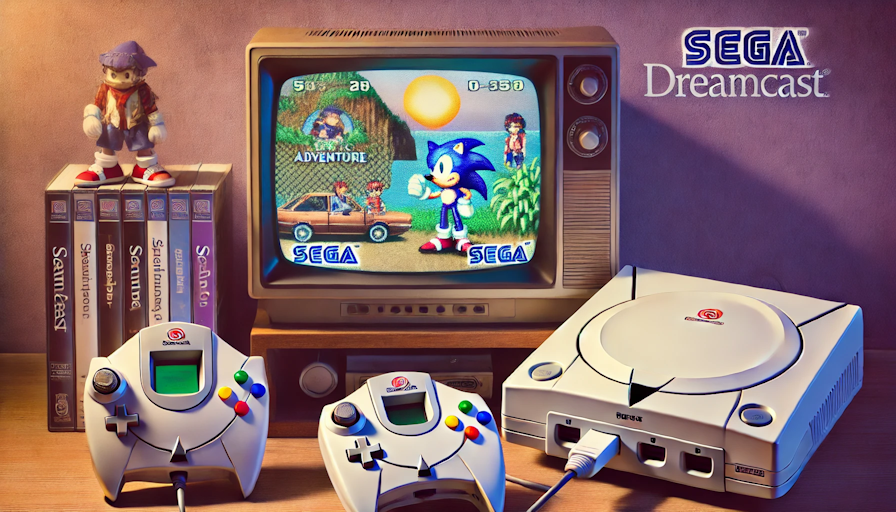
The Sega Dreamcast, launched in 1998, was Sega’s bold attempt to redefine the gaming landscape. With its advanced technology and features like online gaming, it generated significant buzz. However, despite its promising start, it failed to hold its ground against Sony’s PlayStation 2 and Microsoft’s Xbox. Let’s explore why the Dreamcast didn’t live up to its potential.
The Competitive Edge: Sony and Microsoft
One of the Dreamcast’s main challenges was the intense competition from Sony’s PlayStation 2 and Microsoft’s Xbox. Both consoles, arriving shortly after the Dreamcast, quickly dominated the market. The PlayStation 2, with its extensive game library and strong brand presence, sold over 155 million units worldwide. The Xbox also captivated gamers with its robust hardware and superior online capabilities.
Marketing Missteps and Bad Timing
Sega’s marketing strategy for the Dreamcast was lacklustre. The promotional campaigns were confusing and failed to clearly convey the console’s unique features. Additionally, the Dreamcast’s release in 1998 was poorly timed, as the PlayStation 2 hit the market just two years later, overshadowing the Dreamcast’s presence and appeal.
Lack of Third-Party Support
For any gaming console, strong third-party support is crucial. Unfortunately, the Dreamcast struggled to attract game developers, leading to a limited game library. Major game franchises and developers gravitated towards the PlayStation 2 and Xbox, which offered better market stability and a larger user base.
Limited Game Library
While the Dreamcast had some standout titles like Sonic Adventure and Shenmue, its overall game library was insufficient compared to its rivals. Many of the games available were ports from other systems, lacking originality and exclusivity. This limited selection failed to keep gamers engaged long-term.
Expensive and Complex Hardware
The Dreamcast’s advanced hardware, while impressive, also contributed to its downfall. It was more expensive than its competitors, making it less accessible. Additionally, the complex architecture posed challenges for game developers, further discouraging them from creating games for the console.
Piracy and Hacking Issues
The Dreamcast was notorious for its vulnerability to piracy. It was relatively easy to hack, allowing users to play pirated games, which severely impacted Sega’s revenue and discouraged third-party developers. This security flaw tarnished the Dreamcast’s reputation and market viability.
Failing to Attract Casual Gamers
Unlike the PlayStation 2 and Xbox, the Dreamcast struggled to appeal to casual gamers. Its marketing was geared more towards hardcore gamers, neglecting the broader, family-friendly audience. This narrow focus limited its market reach and overall success.
Sega’s Financial Struggles
Sega was already facing financial difficulties before the Dreamcast’s release. The failure of the Dreamcast exacerbated these issues, forcing Sega to exit the console market altogether and shift to software development. This financial instability also impacted their ability to compete effectively with Sony and Microsoft.
The Legacy of the Dreamcast
Despite its commercial failure, the Dreamcast left a lasting impact on the gaming industry. It introduced several innovations, such as online gaming, which became standard in future consoles. The Dreamcast also has a dedicated fan base and is remembered fondly for its unique contributions to gaming.